A proposal to run Spite House Studios' marketing as one integrated department. Paid media, lifecycle, CRO, creative, and launch planning, operating as a single connected system instead of four separate agencies.
A Note from Andrew
What stuck with me from our call was how clearly you see the brand. The bit about the layer beneath the humor, the moment where someone has to admit something across the table before the joke lands, isn't how most founders in this category think. That's the read most agencies would never get to on their own. You don't need one to teach you why the product works.
You need a team that can take how you already think about the brand and operationalize it across paid, lifecycle, creative, and CRO without losing what makes it the brand. That's the relationship we build with the clients we keep. We spend time understanding how an owner sees the business and build around it. We tell you when we think something's the wrong call. We bring you quarterly plans you can trust and weekly execution you don't have to babysit. And we treat the business like ours, because that's the only version of this that ever actually works.
We've worked this shape of business before. Toilet Timer at #1 on Amazon. ACA running four product launches back to back in a single summer with the launch system we built for them. Low AOV, seasonal curve, gift-coded buyer, founder voice carrying the brand. Different products, same shape, same playbook.
Let's build it.
Current State
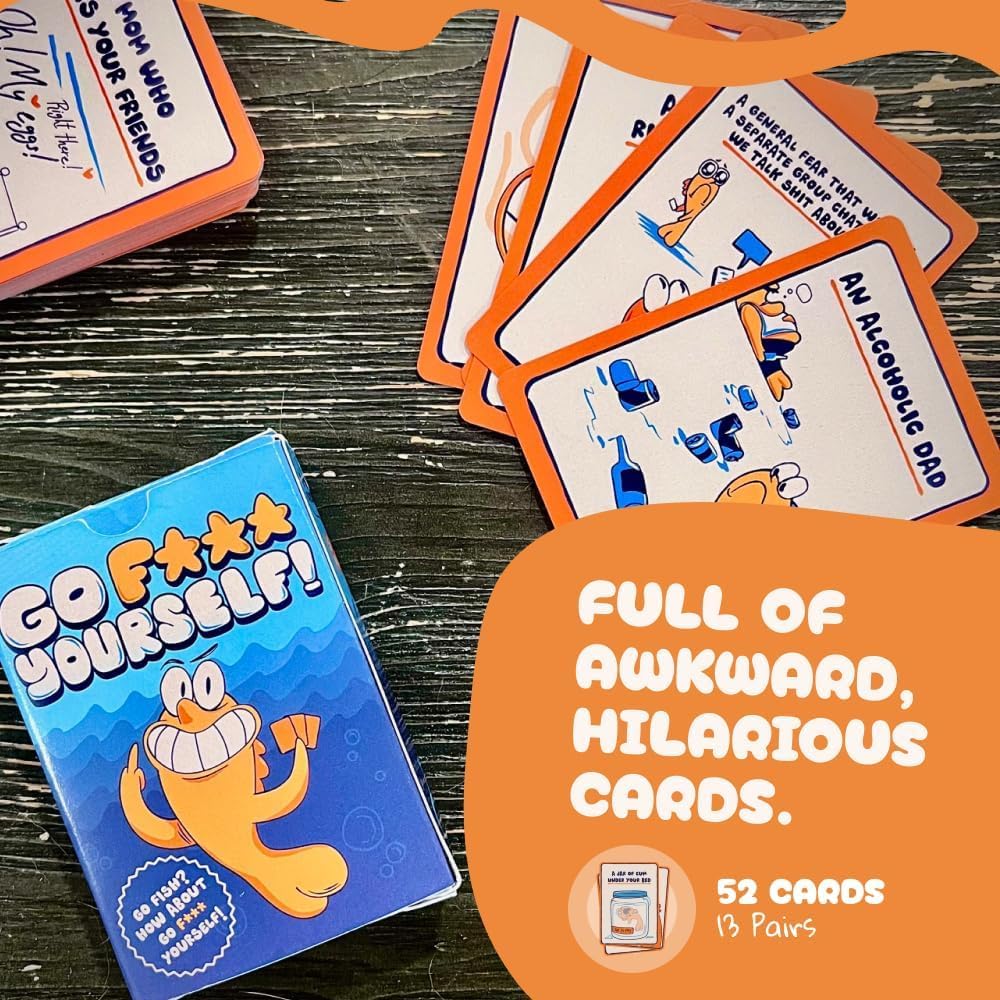
A million units sold, a billion TikTok views, and Walmart, Target, and Spencer's coming online. The marketing infrastructure underneath hasn't kept pace. Growth is happening despite the structure, not because of it.
The product has earned ad-grade claims most brands can't make. 1M+ units sold, 1B+ TikTok views, #1 party game on TikTok Shop. None of them are in the current creative rotation.
Email opens at 48.86%. Almost no DTC brand reads above 33%. Brand voice is working. The 0.44% click rate says the emails don't ask anyone to buy.
One Meta campaign is doing real work. "Scaling | Winners" at $12.56 CPA, 2.15x ROAS, 30% of spend, 40% of purchases. The other campaigns that should be feeding into it are paused.
Attribution math is off by 45%. Meta reports $48.5K; Shopify credits Meta with $33.5K. Real ROAS is between 1.24x and 1.83x. Budgeting from either number alone is budgeting from half the picture.
38% of Meta spend is on a 1.61x ROAS campaign. Mom & Dad. The original GFY angles are doing 2.5x+ on a fraction of the budget. Inside Mom & Dad, one creative is 20% of total Meta spend on its own.
No post-purchase flow behind 38,382 buyers. Someone who buys GFY is the perfect prospect for Mom & Dad. Mom & Dad buyers haven't been told about the Naughty Pack. That's automated revenue going unclaimed.
The Real Challenge
You don't have a traffic problem.
You don't have a product problem.
You have an operating system problem.
The Gaps
Six full-funnel campaigns are paused. Everything is collapsed into Advantage+ Sales, which converts the hot 5% but can't build the warm pool that feeds it. Session quality dropped 24% in 30 days. That's the symptom.
Every live ad opens with a version of the same joke. The brand bit is a year old. The Meta audience is broader and older than TikTok's. Persona hooks, pain agitation, social proof leads, and founder POV are all missing from the rotation.
Klaviyo is mostly working. 48.86% opens, clean segmentation, SMS performing well. A handful of low-lift fixes (a CTA in every campaign, a post-purchase flow, a welcome series patch) and it rolls into the same retainer as the Meta work, no separate workstream needed.
One agency for paid, one for creative, one for CRO, one for email is how the strategy ends up disconnected from the math. Spite House needs a single team running every lever, quarterly planned, weekly executed, daily optimized.
The Approach
Four integrated pillars, one team. Each one solves a specific problem in the business, and they all run through the same strategy and the same operating cadence.
A scalable acquisition system that creates predictable growth instead of relying on viral spikes.
A creative system that ships new tests every week, so winners don't burn out before the next one is ready.
Klaviyo runs as a connected channel inside the larger system, not a separate workstream.
Shopify becomes a real revenue channel, and the brand gets planned at the quarter level instead of the week level.
Execution
A relationship that moves through three phases of business progression. You're not managing us, you're approving direction and showing up to the calls that move the work forward.
We start by learning the business beneath the metrics.
Once the foundation is clear, we begin connecting the pieces.
With systems in place, the focus shifts toward growth.
Ongoing Rhythm
Behind-the-scenes work that keeps things moving without requiring your attention.
A focused strategy call. Data translated into plain decisions, not a dashboard dump.
A bigger-picture session with leadership, designed to keep the strategy ahead of the launches.
Every creative decision, budget shift, and platform call is tied to a metric that matters to the business. We optimize based on what the numbers say, not what feels right.
When something works, we scale it. When it doesn't, we cut it fast. A 4-month product cadence demands a creative team that ships every week, not every quarter.
Your time isn't spent approving every ad. It's spent making the calls that matter. We bring you recommendations, push back where it counts, and run inside the boundaries we set together.
Blended CAC is the north star. We are not chasing platform ROAS, we are chasing what the store actually keeps. Profitable scale or no scale.
Partnership
One integrated team across strategy, paid media, creative, lifecycle marketing, CRO, reporting, and planning.
Your Team
This is a slice of the team that touches the Spite House account day to day. Director-level lead for every function that matters to the business, with specialists running execution underneath.


I spent time inside your Meta and Klaviyo accounts and reconciled both against Shopify. Here is what jumped out. The short version: there's a lot of room to grow on Meta, and Klaviyo is doing more right than wrong already.
The Headline
Context before the findings: this account isn't failing. It scaled hard. Gross sales up 51% in 30 days, sessions up 47%, Facebook-attributed revenue up 270% per Shopify. The growth is real. What's missing is the structure to scale it cleanly. A few things are working really well. A few are misaligned. And one creative is doing too much of the work.
Real Meta-driven ROAS is somewhere between 1.24x and 1.83x. Neither platform is lying, they just count differently. Meta gets credit for view-through; Shopify only counts the first click. The number we'd actually budget against is the blended one: $92K in gross sales against $27K in Meta spend over 30 days. That's the read we trust.
Six Findings · Meta
$8,199 of spend, 653 purchases, $12.56 CPA, 2.15x ROAS. That's 30% of spend driving 40% of purchases. This is the campaign every other campaign should be feeding into. Whatever else we do, leave this one alone.
You've tested 12+ creators and 4 to 5 of them are landing at 1.5 to 2.2x ROAS on small budgets. The ad-naming convention is clean too, which tells me whoever's running this takes the account seriously. The path to graduate creators into the bigger campaign already exists, it just needs more volume going through it.
This is the one I'd want to walk through on a call. 38% of total Meta spend ($10,284) is going to Mom & Dad at 1.61x ROAS. One creative inside it (Grey Hairs Game Night) is $5,355 on its own, which is 20% of your entire Meta spend on a single ad with nothing ready to replace it when it fatigues. Meanwhile your original GFY angles are doing 2.5x+ on a fraction of the budget. The money is in the wrong campaign.
The scaling campaign is on ABO instead of CBO. Every winner lives in its own ad set, so when fatigue hits one of them, Facebook can't shift budget into the others, it just keeps spending on the tired one. Flipping this to CBO is a quick change that compounds over time.
This one honestly surprised me. The whole account is UGC video. One static ad has ever run ($580 spent, fatiguing at 2.5 frequency). No card-phrase carousels, no founder POV, no review screenshots. Your product is basically a billboard already, the box, the card phrases, the brand name, and statics should outperform UGC for that reason. It's a whole category of creative the account hasn't started testing.
TOF interest, TOF lookalikes, TOF broad, MOF re-engagement, BOF retargeting, awareness. All off. Everything got collapsed into Advantage+ Sales, which is excellent at converting your warmest 5% but has no way to build that warm audience in the first place. The signal is already showing: sessions are up 47% in 30 days but conversion rate dropped 24%. Translation, the traffic getting through is colder than before.
The Headline
Worth saying upfront: whoever is running this account knows what they're doing. 48.86% opens against a 33% benchmark, holding even on 30K+ sends. Segmentation is intentional. SMS performs. Most of the hard work is already done. There are a few small things I'd tweak (a missing CTA pattern, a post-purchase flow, a couple welcome-series settings) and they roll into our scope without needing their own workstream.
48.86% opens against a 33% benchmark, holding even on 30K+ sends. Subject lines like "Welcome, you magnificent bastard" are doing the work. Your audience actually wants to hear from you, which is the rare thing most brands never get to.
The Mom & Dad launch SMS went to 16,781 people: 6.51% click rate, 1.04% placed order rate, rated "Excellent" by Klaviyo. SMS revenue-per-recipient is $0.29 against email's $0.04. The channel works, it just runs at roughly half the cadence it could.
Exclusion logic on every major send (spam traps, never-engaged, bounced, suppressed) is intentional. Your default send list is "120 Days Engaged // US Only," which is real list hygiene. Most brands at your size are still batch-and-blasting. You're not.
The opens are great. The clicks aren't (0.44%). Most of your story-forward campaigns don't have a clear product link, so people open, read, and move on. Adding one consistent CTA pattern to every campaign closes a real chunk of that gap. Easy fix, meaningful lift.
You have 38,382 buyers all-time and no post-purchase flow behind them. Someone who buys GFY is the most obvious prospect for Mom & Dad. Someone who buys Mom & Dad probably doesn't know the Naughty Pack exists. A Day 3 / Day 7 / Day 14 sequence is a one-time build that prints recurring revenue from then on.
Couple things to flag. Smart Sending is on with a 16-hour window, but Email 2 of the welcome flow is set to fire 4 hours after Email 1, so Smart Sending blocks it for most new subscribers. They never get the highest-converting email. One-checkbox fix. Second, deliverability is sitting at 71 (Fair) because there's no dedicated sending subdomain yet. Setting one up is a half-hour job and it protects every send going forward.
If we had to point at one place where the biggest gains live, it's Meta. The funnel is collapsed, scaling and testing are running backwards, statics haven't been tested, and one creative is doing 20% of your total spend. Fix that structure and the path back to $150K/mo opens back up. The Klaviyo work rolls into the same retainer and adds on top of it.
If this proposal lines up with what you're looking for in a marketing partner, the next step is a short call to align on priorities and get going. We'd love to do this with you.
andrew@cyclonesocial.com